
Portable power, explained clearly.Compare every model
Back to all products

G Series · Industrial modular power

Modular portable power station. Build the capacity you need.

Start with a main base and battery module, then add stored energy, independent inverter channels and solar input as your RV, cabin, backup or worksite plan grows.

Buy on SoreinPower
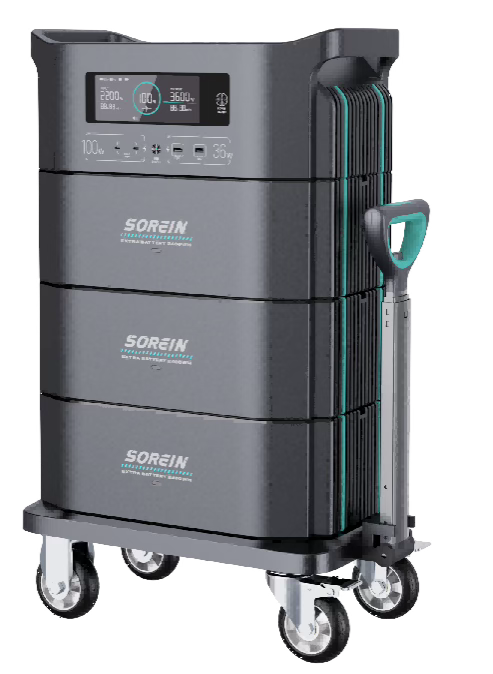
G7200 power station
7,200Wh3,300W rated · 6,500W peakG7200 configuration

How modular works

One base. Add runtime. Add output.

A modular portable power station lets the system change with the job. Add battery modules when you need more hours, add inverter modules when you need more independently managed AC output, and keep the configuration grounded in the documented limits.

01

Main base

The control center supplies the starting AC channel, AC charging, solar input and system controls.

02

Battery modules

Each compatible battery adds 2.4kWh of stored energy so runtime can grow without replacing the base.

03

Inverter modules

Each added inverter creates another independently managed AC output channel for configured high-demand loads.

04

Trolley

The matching mobile chassis keeps the assembled stack together when the system needs to move.

System range Named configurations run from 2.4kWh to 9.6kWh. Compatible linked US configurations can reach up to 55.2kWh and 16.5kW; capacity and output depend on the exact system plan.

Choose the starting point

Build around the load, not the label.

Start with the device load and required runtime. The right G Series configuration is the smallest system that meets both, with room to expand later.

G Series modular portable power station configurations
ConfigurationCapacityAC outputModulesBest starting use
G24002,400Wh3,300W rated · 6,500W peak1 main base + 1 batteryStart with high output for focused backup and tools.
G48004,800Wh3,300W rated · 6,500W peak1 main base + 2 batteriesAdd stored energy for RV stays and cabins.
G72007,200Wh3,300W rated · 6,500W peak1 main base + 3 batteriesPrioritize longer runtime on one inverter channel.
G7200 Pro7,200Wh6,600W · 2 × 3,300W1 main base + 3 batteries + 1 inverterAdd a second AC channel for higher-draw work.
G9600 Pro9,600Wh6,600W · 2 × 3,300W1 main base + 4 batteries + 1 inverterBalance long runtime with separately managed loads.
G9600 Ultra9,600Wh9,900W · 3 × 3,300W1 main base + 4 batteries + 2 invertersUse three inverter channels for the largest listed output.

01

The lineup

See the differences before you choose.

Stack power. Scale freely. Named configurations span 2.4–9.6kWh. Multiple systems can be linked with compatible original factory cables for up to 55.2kWh and 16.5kW total output in the US specification; plan each inverter channel and installation separately.

Runtime first

How long can it power your setup?

Choose a model and enter the combined running watts. This makes battery size tangible before you compare ports and secondary features.

Power station
Estimated runtime20.4 hr

2,400Wh × 85% ÷ 100W

3,300W rated · 6,500W peak. Motors, compressors and tools may need extra startup power; G Series loads must also fit within each inverter channel.
Planning estimate only: capacity × 0.85 ÷ load watts. Actual runtime changes with device cycling, temperature, battery condition, conversion loss and simultaneous loads.

Runtime snapshots

Plan hours before you plan hardware.

These estimates use 85% of listed capacity divided by a steady load. They help compare configurations; real appliances cycle, surge and change demand.

Estimated runtime at a steady listed load
ModelRefrigeration120WWork lights200WWater pump800WCutoff saw2,200W
G24002,400Wh17.0 hr10.2 hr2.5 hr56 min
G48004,800Wh34.0 hr20.4 hr5.1 hr1.9 hr
G72007,200Wh51.0 hr30.6 hr7.7 hr2.8 hr
G7200 Pro7,200Wh51.0 hr30.6 hr7.7 hr2.8 hr
G9600 Pro9,600Wh68.0 hr40.8 hr10.2 hr3.7 hr
G9600 Ultra9,600Wh68.0 hr40.8 hr10.2 hr3.7 hr

Calculation method Estimated runtime = usable capacity × 0.85 ÷ average load watts. The 0.85 planning factor represents typical conversion loss; temperature, battery age, device cycling, startup surge and simultaneous loads can change the result.

02

Model by model
See what changes as you step up.

01
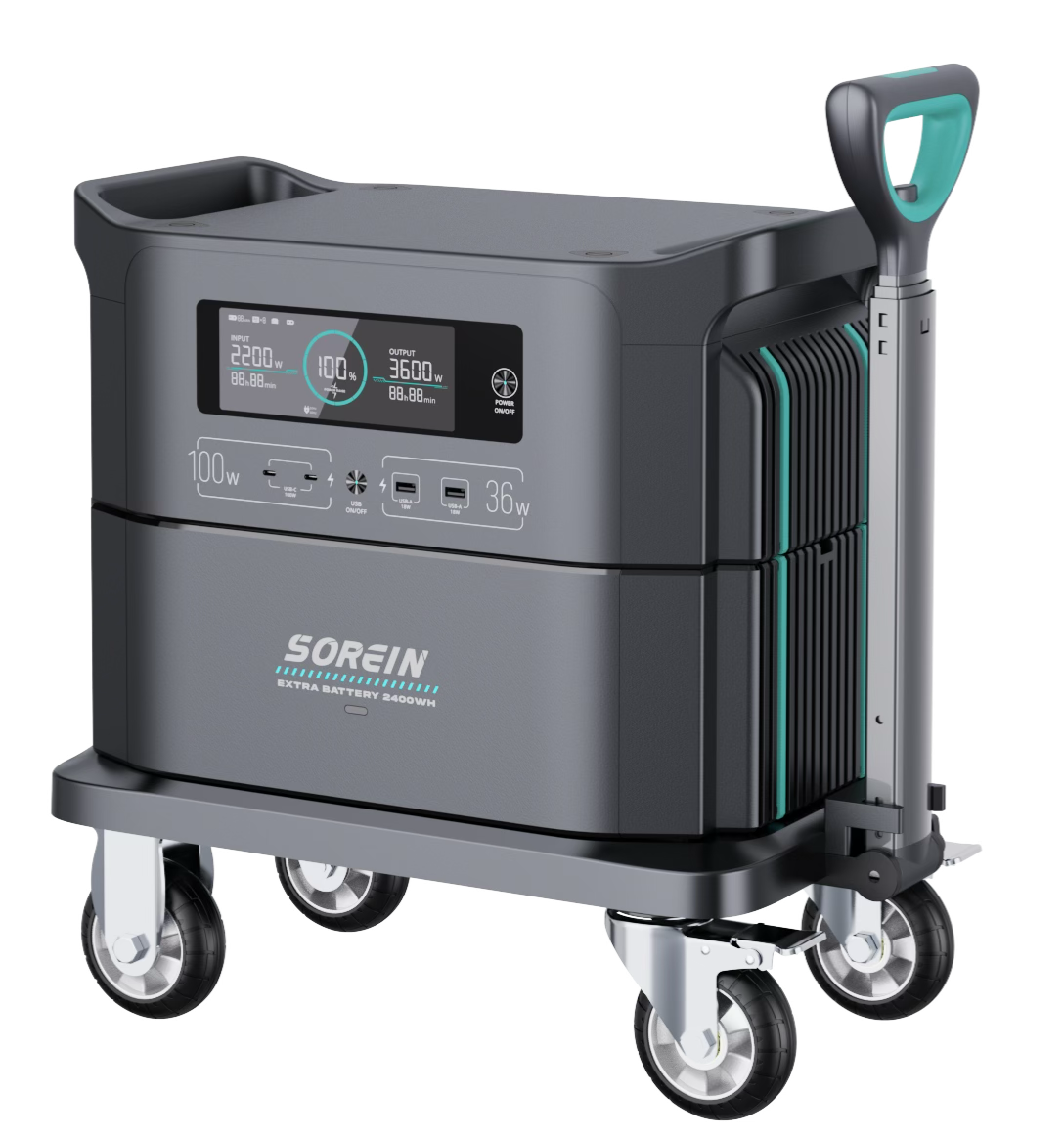
G2400 product view

Modular high-output starting point

G2400

One main base and one battery pack deliver industrial-grade output in the smallest G Series configuration.

Typical runtime snapshotsAt steady listed load
Refrigeration17.0 hr120W
Work lights10.2 hr200W
Water pump2.5 hr800W
Cutoff saw56 min2,200W
Capacity
2,400Wh
AC output
3,300W rated · 6,500W peak
Battery
48V LFP · 4,000 cycles to 80%
AC recharge
Approx. 2.3 hours
Solar plan
Up to 1,000W via main base
Best for
Construction tools, RV power, focused backup

Standout capabilities

  1. 01Start with one 2.4kWh battery module
  2. 023.3kW inverter channel
  3. 036.5kW startup peak
  4. 04Roll-and-stack modular platform
Full technical specifications

Battery information

Capacity
2,400Wh
Chemistry
48V lithium iron phosphate (LFP)
Cycle life
4,000 cycles to 80% capacity

Output ports

AC output
3,300W rated · 6,500W peak
AC outlets
4 × NEMA 5-20 + 1 × TT-30
USB-A
2 ports · 18W each · 36W total
USB-C
2 ports · up to 100W total

Input & system

AC charging
Up to 1,800W · approx. 2.3 hours
Solar charging
Up to 1,000W · 100V / 20A via main base
Transfer time
≤20ms UPS
Connection
Wi-Fi and Bluetooth · EnergyKeeper app

Physical & operating

Size / weight
545 × 313 × 600mm · approx. 38kg
Charging temperature
0°C to 45°C
Discharging temperature
−20°C to 45°C
Construction
Modular aluminum body with mobile trolley

Specifications shown are the documented configuration used for this guide. Outlet shape and certain ratings can vary by market; confirm the exact store listing before purchase.
02
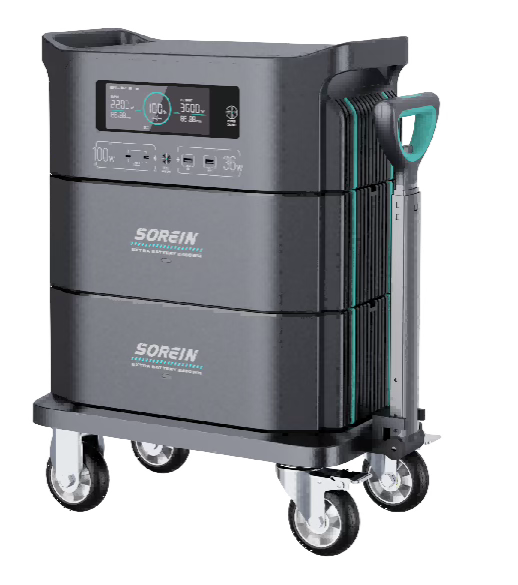
G4800 product view

Double the stored energy

G4800

A second 2.4kWh battery pack extends runtime while keeping the same 3.3kW inverter channel.

Typical runtime snapshotsAt steady listed load
Refrigeration34.0 hr120W
Work lights20.4 hr200W
Water pump5.1 hr800W
Cutoff saw1.9 hr2,200W
Capacity
4,800Wh
AC output
3,300W rated · 6,500W peak
Battery
48V LFP · 4,000 cycles to 80%
AC recharge
Approx. 3.3 hours
Solar plan
Up to 1,000W via main base
Best for
RV stays, cabins and longer mobile work

Standout capabilities

  1. 01Two stackable 2.4kWh battery modules
  2. 02Same 3.3kW inverter channel
  3. 03Double G2400 storage
  4. 04Expand without replacing the base
Full technical specifications

Battery information

Capacity
4,800Wh
Chemistry
48V lithium iron phosphate (LFP)
Cycle life
4,000 cycles to 80% capacity

Output ports

AC output
3,300W rated · 6,500W peak
AC outlets
4 × NEMA 5-20 + 1 × TT-30
USB-A
2 ports · 18W each · 36W total
USB-C
2 ports · up to 100W total

Input & system

AC charging
Up to 1,800W · approx. 3.3 hours
Solar charging
Up to 1,000W · 100V / 20A via main base
Transfer time
≤20ms UPS
Connection
Wi-Fi and Bluetooth · EnergyKeeper app

Physical & operating

Size / weight
545 × 313 × 670mm · approx. 60kg
Charging temperature
0°C to 45°C
Discharging temperature
−20°C to 45°C
Construction
Modular aluminum body with mobile trolley

Specifications shown are the documented configuration used for this guide. Outlet shape and certain ratings can vary by market; confirm the exact store listing before purchase.
03
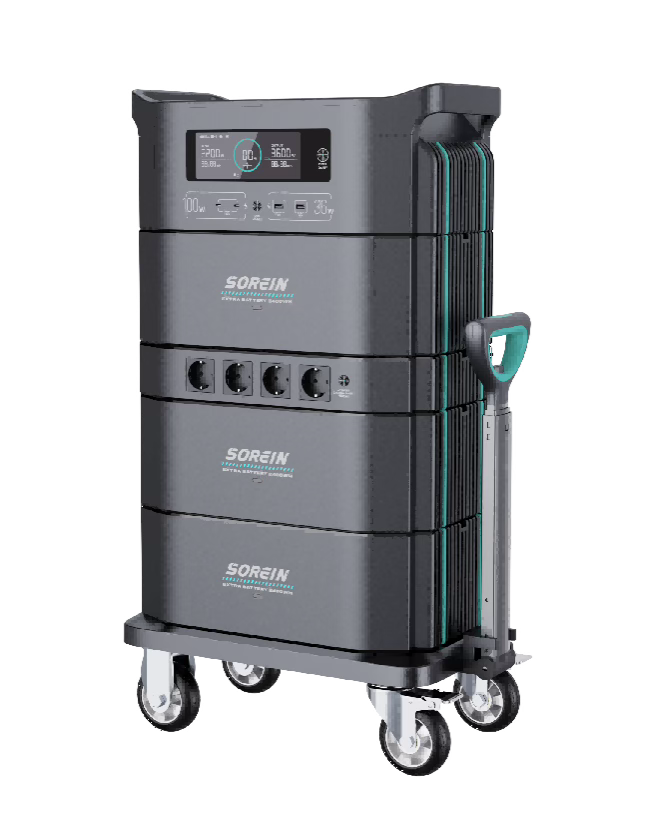
G7200 product view

Long-runtime single inverter

G7200

Three battery packs prioritize runtime for continuous loads without adding a second inverter channel.

Typical runtime snapshotsAt steady listed load
Refrigeration51.0 hr120W
Work lights30.6 hr200W
Water pump7.7 hr800W
Cutoff saw2.8 hr2,200W
Capacity
7,200Wh
AC output
3,300W rated · 6,500W peak
Battery
48V LFP · 4,000 cycles to 80%
AC recharge
Approx. 4.8 hours
Solar plan
Up to 1,000W via main base
Best for
Cabins, backup essentials and multi-day work

Standout capabilities

  1. 017.2kWh single-channel configuration
  2. 02Built for long continuous loads
  3. 033.3kW rated / 6.5kW peak
  4. 04Battery modules remain serviceable
Full technical specifications

Battery information

Capacity
7,200Wh
Chemistry
48V lithium iron phosphate (LFP)
Cycle life
4,000 cycles to 80% capacity

Output ports

AC output
3,300W rated · 6,500W peak
AC outlets
4 × NEMA 5-20 + 1 × TT-30
USB-A
2 ports · 18W each · 36W total
USB-C
2 ports · up to 100W total

Input & system

AC charging
Up to 1,800W · approx. 4.8 hours
Solar charging
Up to 1,000W · 100V / 20A via main base
Transfer time
≤20ms UPS
Connection
Wi-Fi and Bluetooth · EnergyKeeper app

Physical & operating

Size / weight
545 × 313 × 825mm · approx. 82kg
Charging temperature
0°C to 45°C
Discharging temperature
−20°C to 45°C
Construction
Modular aluminum body with mobile trolley

Specifications shown are the documented configuration used for this guide. Outlet shape and certain ratings can vary by market; confirm the exact store listing before purchase.
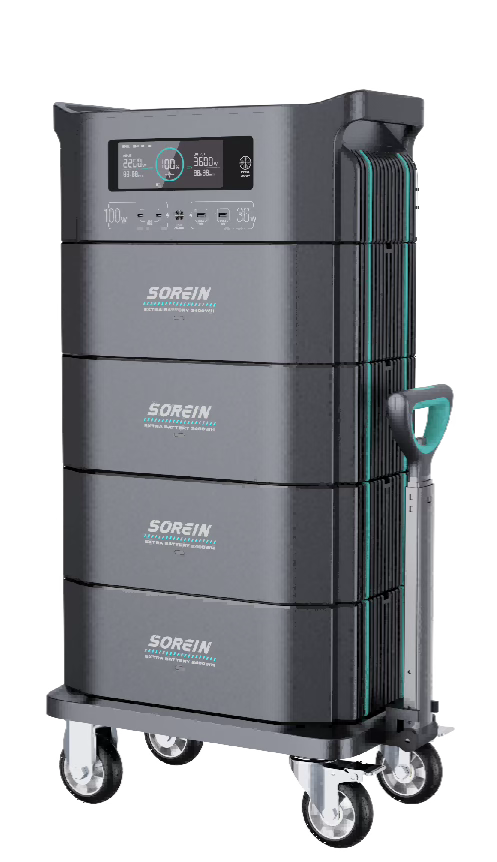
04
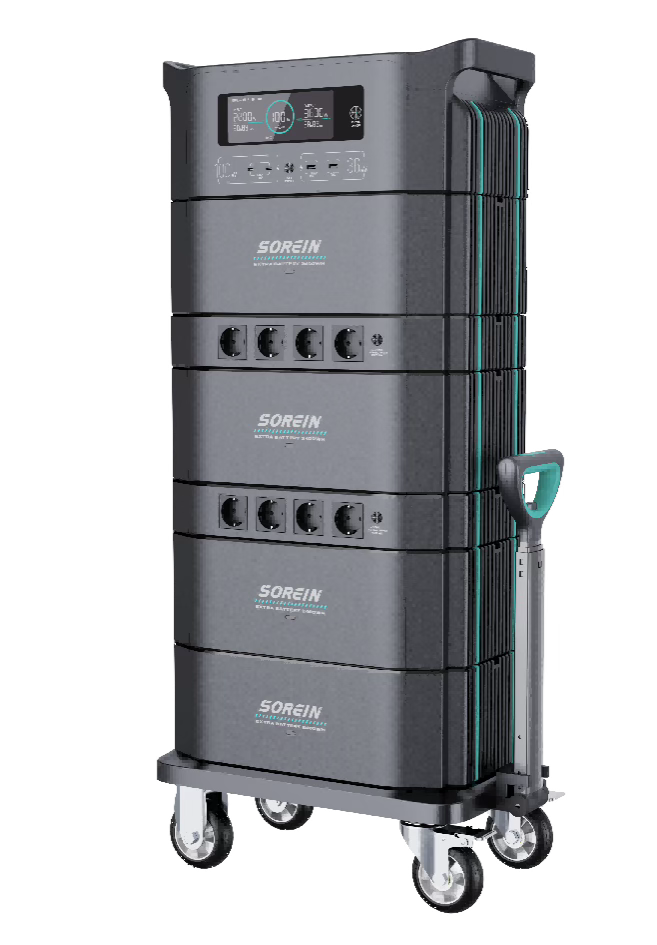
G7200 Pro product view

Dual-inverter performance

G7200 Pro

An extra inverter adds a second independent AC channel, eight outlets and 0ms transfer when configured as specified.

Typical runtime snapshotsAt steady listed load
Refrigeration51.0 hr120W
Work lights30.6 hr200W
Water pump7.7 hr800W
Cutoff saw2.8 hr2,200W
Capacity
7,200Wh
AC output
6,600W · 2 × 3,300W
Battery
48V LFP · 4,000 cycles to 80%
AC recharge
Approx. 2.6 hours
Solar plan
Up to 1,000W via main base
Best for
High-draw tools, sensitive loads and split work zones

Standout capabilities

  1. 01Two independent 3.3kW channels
  2. 020ms transfer configuration
  3. 03Eight NEMA + two TT-30 outlets
  4. 04Faster 3.6kW AC input
Full technical specifications

Battery information

Capacity
7,200Wh
Chemistry
48V lithium iron phosphate (LFP)
Cycle life
4,000 cycles to 80% capacity

Output ports

AC output
6,600W total · 2 independent 3,300W channels
AC outlets
8 × NEMA 5-20 + 2 × TT-30
USB-A
2 ports · 18W each · 36W total
USB-C
2 ports · up to 100W total

Input & system

AC charging
Up to 3,600W · approx. 2.6 hours
Solar charging
Up to 1,000W · 100V / 20A via main base
Transfer time
0ms when configured as specified
Connection
Wi-Fi and Bluetooth · EnergyKeeper app

Physical & operating

Size / weight
545 × 313 × 897mm · approx. 89kg
Charging temperature
0°C to 45°C
Discharging temperature
−20°C to 45°C
Construction
Modular aluminum body with mobile trolley

Specifications shown are the documented configuration used for this guide. Outlet shape and certain ratings can vary by market; confirm the exact store listing before purchase.
05
G9600 Pro product view

High output with longer runtime

G9600 Pro

Four battery packs and two inverter channels balance sustained runtime with separately managed high-power loads.

Typical runtime snapshotsAt steady listed load
Refrigeration68.0 hr120W
Work lights40.8 hr200W
Water pump10.2 hr800W
Cutoff saw3.7 hr2,200W
Capacity
9,600Wh
AC output
6,600W · 2 × 3,300W
Battery
48V LFP · 4,000 cycles to 80%
AC recharge
Up to 3,600W AC input
Solar plan
Up to 1,000W via main base
Best for
Construction, large backup plans and mobile workshops

Standout capabilities

  1. 01Two independent 3.3kW channels
  2. 029.6kWh modular storage
  3. 030ms transfer configuration
  4. 04Up to 3.6kW AC input
Full technical specifications

Battery information

Capacity
9,600Wh
Chemistry
48V lithium iron phosphate (LFP)
Cycle life
4,000 cycles to 80% capacity

Output ports

AC output
6,600W total · 2 independent 3,300W channels
AC outlets
8 × NEMA 5-20 + 2 × TT-30
USB-A
2 ports · 18W each · 36W total
USB-C
2 ports · up to 100W total

Input & system

AC charging
Up to 3,600W
Solar charging
Up to 1,000W · 100V / 20A via main base
Transfer time
0ms when configured as specified
Connection
Wi-Fi and Bluetooth · EnergyKeeper app

Physical & operating

Size / weight
545 × 313 × 1052mm · approx. 111kg
Charging temperature
0°C to 45°C
Discharging temperature
−20°C to 45°C
Construction
Modular aluminum body with mobile trolley

Specifications shown are the documented configuration used for this guide. Outlet shape and certain ratings can vary by market; confirm the exact store listing before purchase.

06
G9600 Ultra product view

Maximum listed single-stack output

G9600 Ultra

Three independent inverter channels provide the highest output in the published US G Series lineup.

Typical runtime snapshotsAt steady listed load
Refrigeration68.0 hr120W
Work lights40.8 hr200W
Water pump10.2 hr800W
Cutoff saw3.7 hr2,200W
Capacity
9,600Wh
AC output
9,900W · 3 × 3,300W
Battery
48V LFP · 4,000 cycles to 80%
AC recharge
Approx. 2.3 hours
Solar plan
Up to 1,000W via main base
Best for
Heavy job sites, emergency response and whole-home planning

Standout capabilities

  1. 01Three independent 3.3kW channels
  2. 029.9kW total listed output
  3. 0312 NEMA + three TT-30 outlets
  4. 04Up to 5.4kW AC input
Full technical specifications

Battery information

Capacity
9,600Wh
Chemistry
48V lithium iron phosphate (LFP)
Cycle life
4,000 cycles to 80% capacity

Output ports

AC output
9,900W total · 3 independent 3,300W channels
AC outlets
12 × NEMA 5-20 + 3 × TT-30
USB-A
2 ports · 18W each · 36W total
USB-C
2 ports · up to 100W total

Input & system

AC charging
Up to 5,400W · approx. 2.3 hours
Solar charging
Up to 1,000W · 100V / 20A via main base
Transfer time
0ms when configured as specified
Connection
Wi-Fi and Bluetooth · EnergyKeeper app

Physical & operating

Size / weight
545 × 313 × 1124mm · approx. 118kg
Charging temperature
0°C to 45°C
Discharging temperature
−20°C to 45°C
Construction
Modular aluminum body with mobile trolley

Specifications shown are the documented configuration used for this guide. Outlet shape and certain ratings can vary by market; confirm the exact store listing before purchase.

Modular power FAQ

Answers before you configure.

Use the documented configuration, load and runtime limits to plan a system that can grow without guessing.

Read all technical answers
What is a modular portable power station?

It is a power system built from a main base, detachable battery modules and, on supported configurations, additional inverter modules. You can choose the starting capacity and expand the system as the load or runtime plan grows.

Does adding a battery increase output power?

Adding a battery increases stored energy and runtime. Output power increases only when the configuration supports additional inverter modules; the exact output depends on the regional model and connection plan.

Which G Series configuration is best for an RV?

G4800 is a practical starting point for RV refrigeration, connectivity and appliances between hookups. Choose G7200 when the same loads need to run longer, and pair the system with compatible solar input for daytime recovery.

Can I expand the system later?

The G Series is designed to start with a main base and battery modules, then add compatible batteries or inverters within the documented configuration limits. Confirm the exact cable, order and regional compatibility in the user manual before expanding.

Can a G Series system run power tools?

Yes, when the tool's continuous and startup demand fit the selected inverter channel. G7200 Pro and G9600 Ultra add independent channels for configured high-draw tools; check the tool nameplate and startup demand before use.

Still deciding?

Start with the load, then choose the battery.