
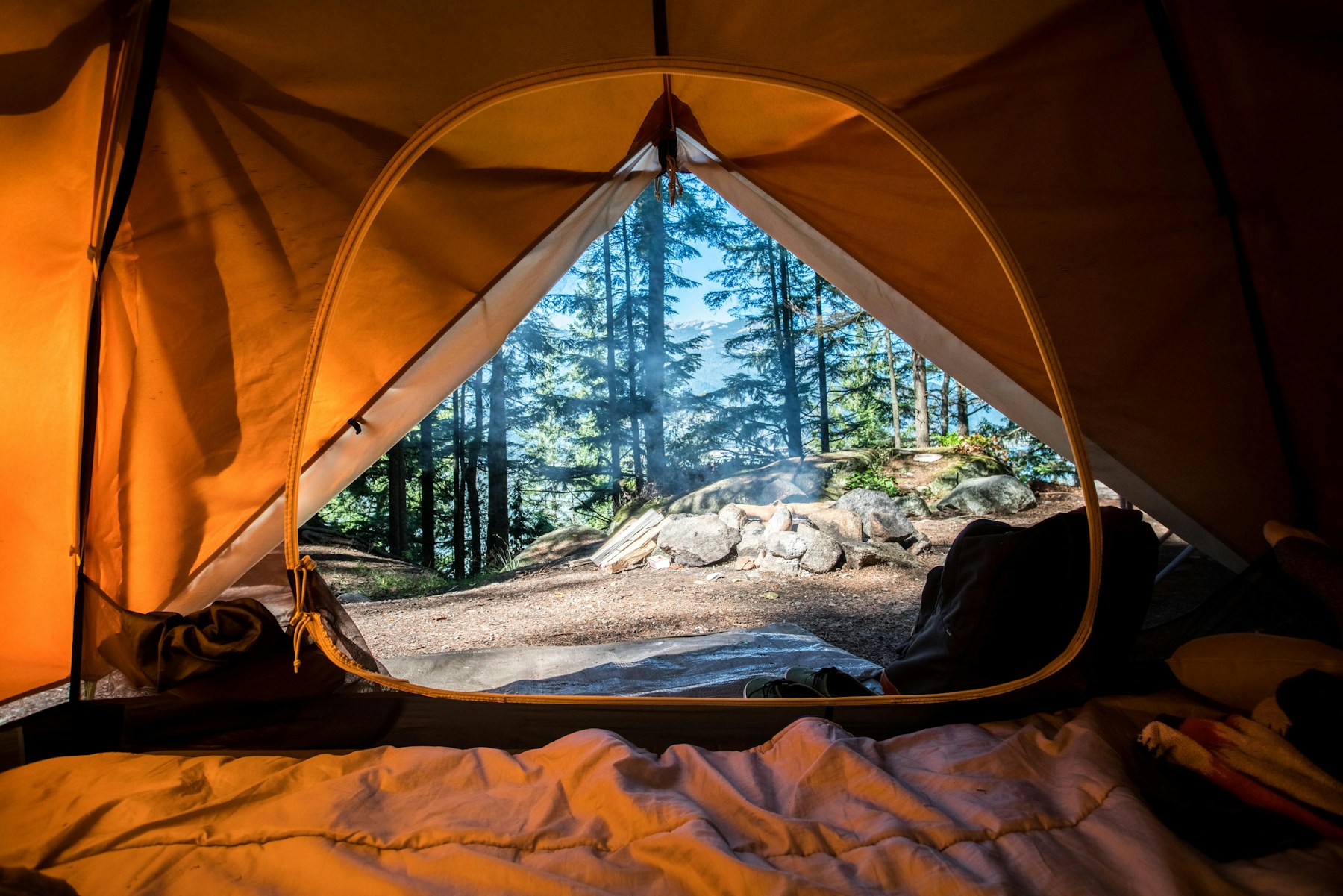
Build a campsite power plan around lights, phones, cameras, coolers and planned comfort loads before choosing a portable or modular configuration.
01
What power does a campsite actually need?
A portable power station for camping stores electricity in a rechargeable battery, converts it into the AC or DC output a device needs, and provides charging ports without running a combustion engine at the point of use. It may still use cooling fans under load, so quiet operation depends on the model and demand.
The right camping setup begins with the campsite, not the biggest battery. A solo overnight trip may only need lighting, phones and a camera. A family basecamp may add a powered cooler, laptops, a router, coffee making and longer time away from an outlet. Each group needs a different balance of output, capacity, weight and recharge time.
02
Divide camping loads into three tiers
Separate every device into essential, comfort and high-draw tiers. This keeps one short appliance cycle from consuming the energy reserved for lighting or communication.
| Tier | Typical devices | Planning priority |
|---|---|---|
| Essential | LED lights, phones, camera batteries, navigation and communication devices | Keep these available for the full trip. |
| Comfort | Laptop, fan, projector, small cooler or portable refrigerator | Estimate average watts and daily operating hours. |
| High draw | Coffee maker, kettle, electric cooking appliance or heater | Check continuous output and startup demand before runtime. |
03
How to size output and battery capacity
Check output first. Add the watts of devices that may run at the same time, then check startup demand for coolers, pumps and other motor-driven equipment. The power station's supported AC channel must be able to start the highest-demand combination.
Then calculate energy. Multiply each device's average watts by the hours it will operate, add the watt-hours together and reserve capacity for conversion loss and unexpected use. More watt-hours extend runtime; they do not automatically increase inverter output.
| Load | Example use | Energy estimate |
|---|---|---|
| LED lighting | 20W for 5 hours | 100Wh |
| Phones and cameras | Combined daily charging | 120Wh |
| Portable cooler | 45W average for 10 hours | 450Wh |
| Laptop | 60W for 2 hours | 120Wh |
| Planning subtotal | Before reserve | 790Wh |
04
Choose a portable or modular camping setup
A compact self-contained power station is usually the clearest choice for light camping loads because one unit is easier to carry, place and recharge. SoreinPower P Series models are designed for this portable role, from phones, cameras and lighting to larger campsite appliances depending on the selected output and capacity.
A modular portable power station becomes useful when the campsite behaves more like a temporary basecamp. Longer stays, powered refrigeration, several users, high-draw appliances or changing trip lengths can justify a G Series configuration. The main base supplies the starting power path, compatible battery modules extend runtime, and supported inverter modules can add independently managed output channels in approved configurations.
- Choose P Series when carrying one self-contained unit is the priority.
- Choose G Series when runtime must grow or several higher-demand loads need a planned system.
- Choose capacity from the trip duration, not only from the number of ports.
- Confirm every appliance's input and startup demand before departure.
05
Plan solar recovery before the trip
Compatible solar panels can recover part of the energy used during the day, but panel wattage is not guaranteed charging output. Sun angle, clouds, shade, temperature, cable loss and the power station's input limit all change the result.
Treat solar as a daily energy budget. Compare the watt-hours you expect to use with the watt-hours the panel can realistically return during useful daylight. Begin the trip with the battery charged rather than depending on uncertain weather for the first day.
- Place the panel outside the shade path and re-aim it as the sun moves.
- Keep charging cables dry, visible and protected from foot traffic.
- Do not exceed the documented solar voltage, current or power limits.
- Carry an AC recharge plan when the trip cannot tolerate an energy shortfall.
06
Use portable power safely at camp
Place the power station on a stable, dry surface with its ventilation openings clear. Protect it from rain, standing water, direct fire and excessive heat. Route cables so they do not become trip hazards or collect water.
Do not place a power station inside a sealed bag or cover it while operating. Follow the product manual for temperature, storage, charging and connection limits. If a campsite appliance uses medical or safety-critical power, follow the device manufacturer's backup requirements instead of relying on a general runtime estimate.
Questions
Frequently asked questions
How much capacity is enough for camping?
Add the watt-hours required by essential and comfort devices for the full trip, then leave reserve for conversion loss, weather and unexpected use. An overnight electronics plan can be small; refrigeration and multi-day basecamps require much more capacity.
Can a portable power station run a camping cooler?
Yes when its AC or DC output meets the cooler's running and startup demand. Runtime depends on the cooler's average consumption, ambient temperature, duty cycle and available watt-hours.
Can I recharge a camping power station with solar panels?
Supported models can use compatible solar input within their documented voltage, current and wattage limits. Actual charging varies with sunlight, panel angle, shade and temperature.
Can I operate a portable power station inside a tent?
Follow the product manual. Keep the unit dry, stable and ventilated, never block its cooling openings, and keep it away from direct heat and combustible hazards.